
I build LLM applications, evaluation tooling, and post-training infrastructure
CTO & Co-founder, Nur Opus · Previously V7 Labs · MSc Artificial Intelligence
I develop Large Language Model applications and make them measurable and improvable: evaluation pipelines, tracing and observability, and iterative improvement loops — all on strong backend and infrastructure foundations.
I'm currently building in post-training and harness engineering: SFT, preference-optimisation, and RL fine-tuning runs, with the eval systems to measure them.
GitHub ·CV · john1091w@gmail.com
What I've done
Throughout my career, I've sought increasingly technical roles. Starting in product support at Verkada and V7 Labs, I began making contributions to V7's public SDK, darwin-py. This earned me a full-time development position at V7, where I became darwin-py's sole developer and maintainer, and owned the backend systems responsible for 2D & 3D medical imaging data (DICOM, NIfTI) for their labelling platform, Darwin. Along the way I refactored darwin-py's core I/O layer for concurrency, delivering an up-to-8× throughput improvement.
I then co-founded Nur Opus, where I led the development, delivery, and maintenance of bespoke LLM applications and evaluation pipelines across multiple client deployments.
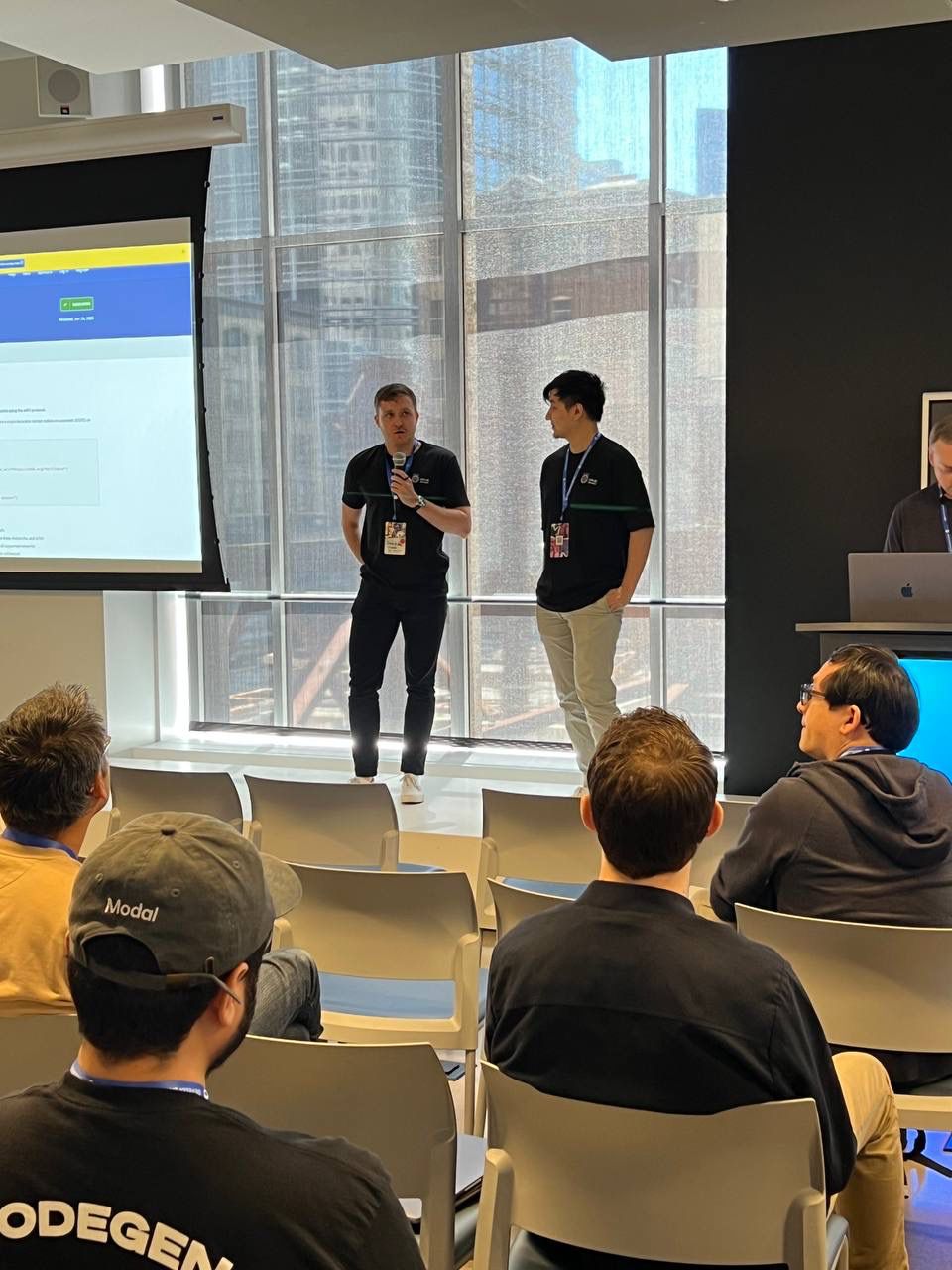
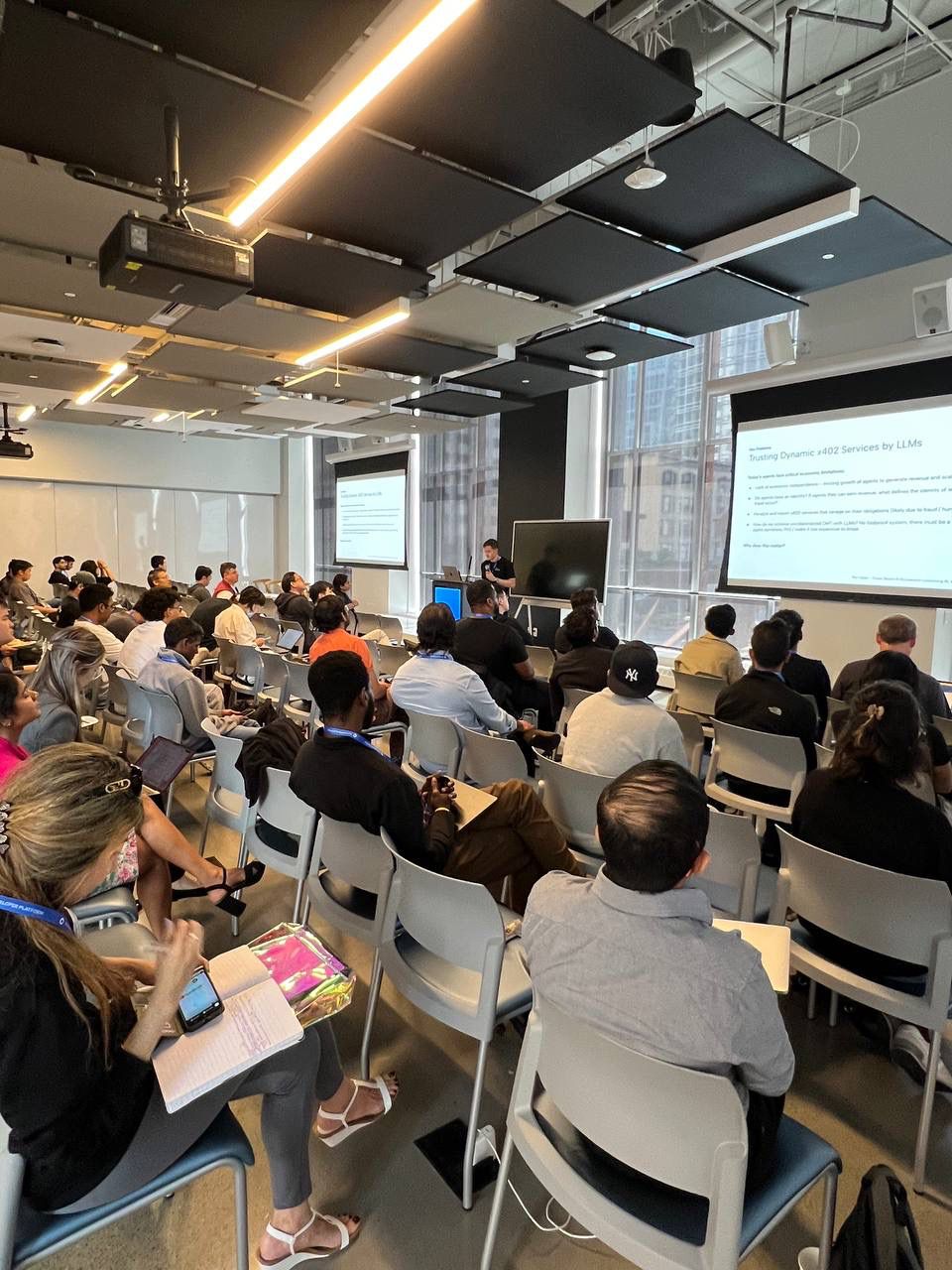
Alongside this, I built Infinite Bazaar as part of a small team: an experiment in agentic machine economies, where AI agents establish verified identities, publish paid services, and trade with one another autonomously. We took 3rd prize at Coinbase's "Agents in Action" hackathon, and I presented the project at the AWS Builder Loft in San Francisco.
What I'm doing now
I'm building Orient: a self-hostable LLM engineering platform, inspired by problems that recurred across nearly every Nur Opus client engagement, best summed up as: "How do I optimise my LLM agent, and keep it optimised over time?" With Orient, you instrument your application with the Python SDK, and production data streams in as traces, which are continually evaluated by reusable deterministic and calibrated LLM-judge evaluators. Failing traces are curated into regression datasets, then Orient tests different context strategies and models to find optimal agent configurations.
Alongside Orient, I'm doing post-training work in the open. Recent rapid improvements in both the cost and performance of open-source LLMs and post-training methods, particularly reinforcement learning (RL), point to a future of continually evaluated, highly-specialised fine-tuned small language models (SLMs) as the optimal way to build with LLMs in most cases. Therefore, I'm engineering models with SFT, DPO, LoRA/QLoRA, RLHF, RLVR, and synthetic-data pipelines — building the eval harnesses around them and publishing write-ups as I go.
Writing
I write about all things LLM: engineering, training, industry, and economic trends.